Bringing insects to life through digital learning at RIF Győr
In collaboration with the "Fess Napfényt" Organisation in Győr, Tdh’s Resilience Innovation Facility (RIF) hosted a unique four-day educational camp with an unexpected focus: insects. The "Bug Camp" was designed to transform common fears about these tiny creatures into understanding and appreciation through a combination of learning sessions and digital fabrication activities.
About RIF Győr
Terre des hommes maintains two RIF locations in Hungary—one in Győr and another in Budapest. At these locations, we offer skill-development activities in both Ukrainian and Hungarian languages. During these sessions, children and young people not only learn to use various tools and digital technologies (2D/3D design, 3D printing, laser cutting, sticker making, etc.) but also create with them.
In addition to skill-development activities at the RIFs (and in schools upon request), we provide Hungarian as a foreign language courses and remedial classes, organize summer camps for children, and support young people's creative initiatives aimed at inclusion and integration.
The community we serve
The Fess Napfényt Association works with Transcarpathian Roma families who have arrived from extremely impoverished regions in search of a better life. "Many villages currently lack water, electricity, and employment opportunities. Of the families who have settled here, most have been able to find work and are planning their future in Győr, with maintaining their own rental apartment as a primary goal." - says Borbála Amey, RIF associate.
For many of the children, the local kindergarten or school represents their first socialization environment, and they greatly enjoy attending. "We observed their development in creativity and concentration even during the summer activity series, and they have only become more skilled since then," notes Borka Békefalvi, our colleague working at the RIF. This context made the Bug Camp particularly meaningful as an opportunity for continued growth and learning.
Why insects?
Insects are an essential part of our everyday lives, yet many of us harbor fears or disgust toward them. We created this camp based on a simple idea: knowledge can ease fear.
"I think even though bugs are a very basic part of our everyday life, most of us have some kind of fear towards them—maybe disgust—which can be eased if we know exactly what we are afraid of," explains Borka Békefalvi. "This was the aim of the camp: showing the children how useful these small creatures can be, how much we depend on them, and on the other hand, how to avoid the ones that we don't necessarily want to get in connection with."
Using digital technologies for this kind of education proved especially effective. As Borka notes, "Using digital technologies for this kind of education worked wonders, as we could remove the fear factor by using different materials like filament for the bodies, paper for the wings, etc."
A mix of learning and creating
Each day featured both an educational block and a hands-on crafting session. The educational components were supported by engaging handouts that kept children focused while learning about:
- Day 1: The "good" insects – bees, spiders, ladybugs
- Day 2: The "bad bugs" – ticks, fleas, lice
- Day 3: The "extra bugs" – the biggest, fastest, and strangest-looking insects
We concluded with a relaxed fourth day of insect-themed movies to reinforce what we'd learned throughout the week.
Digital technology meets nature
What made our Bug Camp unique was how we leveraged digital fabrication to enhance learning:
Insect stamps: Understanding 2D design
We introduced digital equipment by creating laser-cut and laser-engraved bug stamps. Children mixed and matched different legs, torsos, and antennas to design imaginative insects.
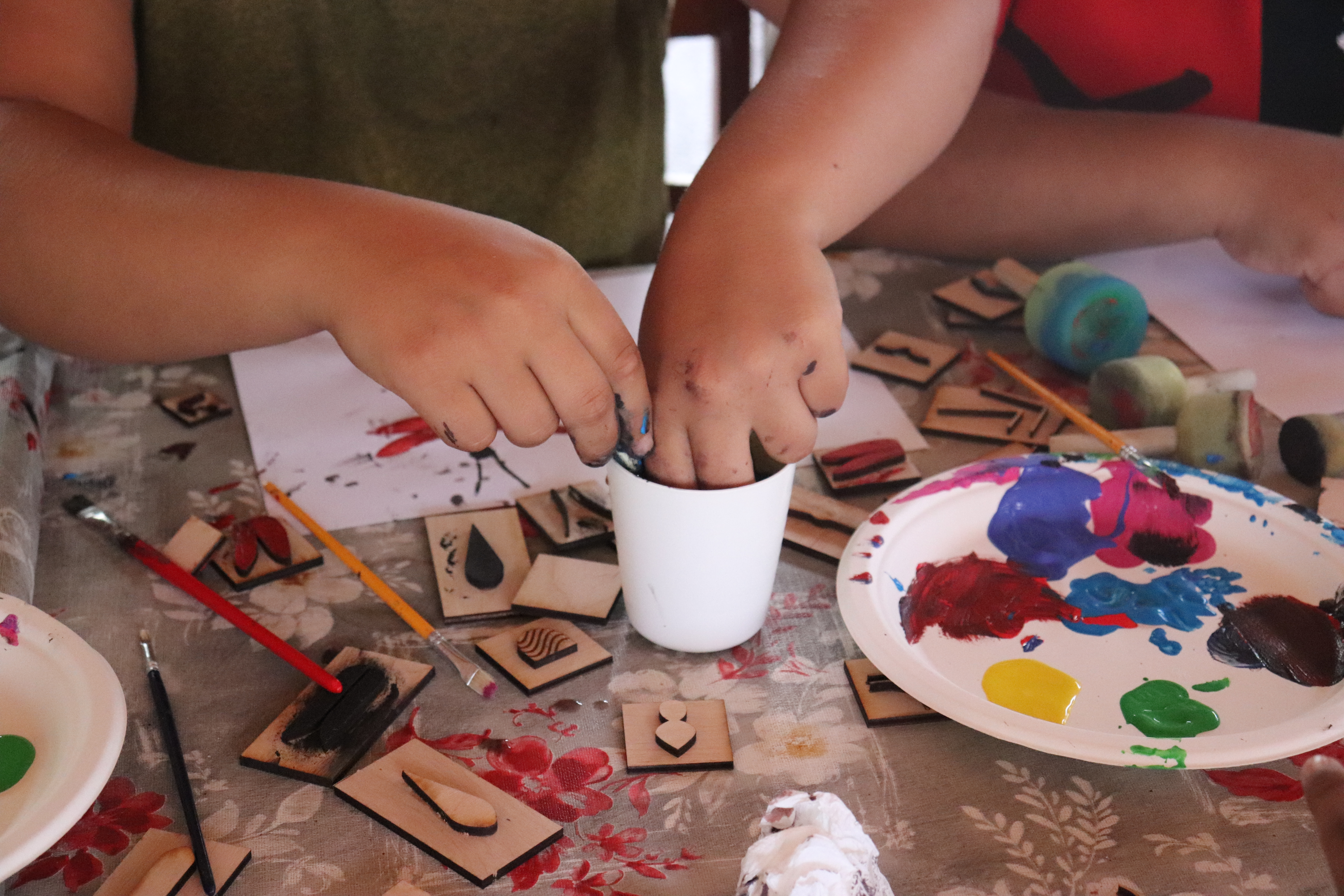
"It was great to display how many different parts a bug can have, and how strange it is, that no matter how they combined the different legs, torsos and antennas, the result still looked like a bug," shares Borka. "I gave them a task to imagine different kinds of bugs (which I gave prompts about) and they had to create with these stamps how they would look. For example, and that was one of their favorites, they had to imagine a bug that lives in a volcano, and a bug that eats chocolate all day."
This activity brilliantly demonstrated how 2D layers work while sparking creativity. As Borka notes, "the stamps were great to introduce how layers work in 2D."
3D printed bugs: From digital to physical
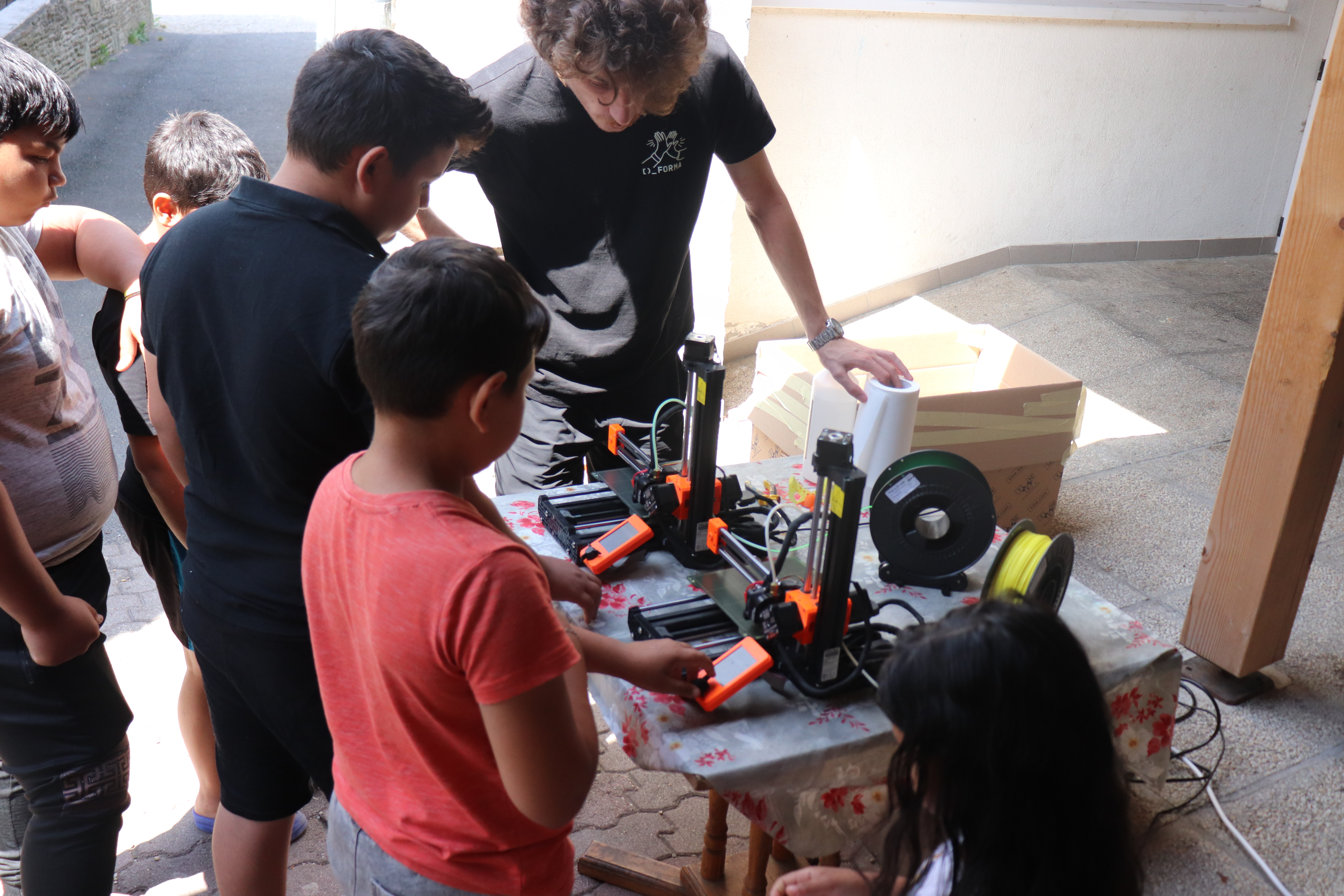
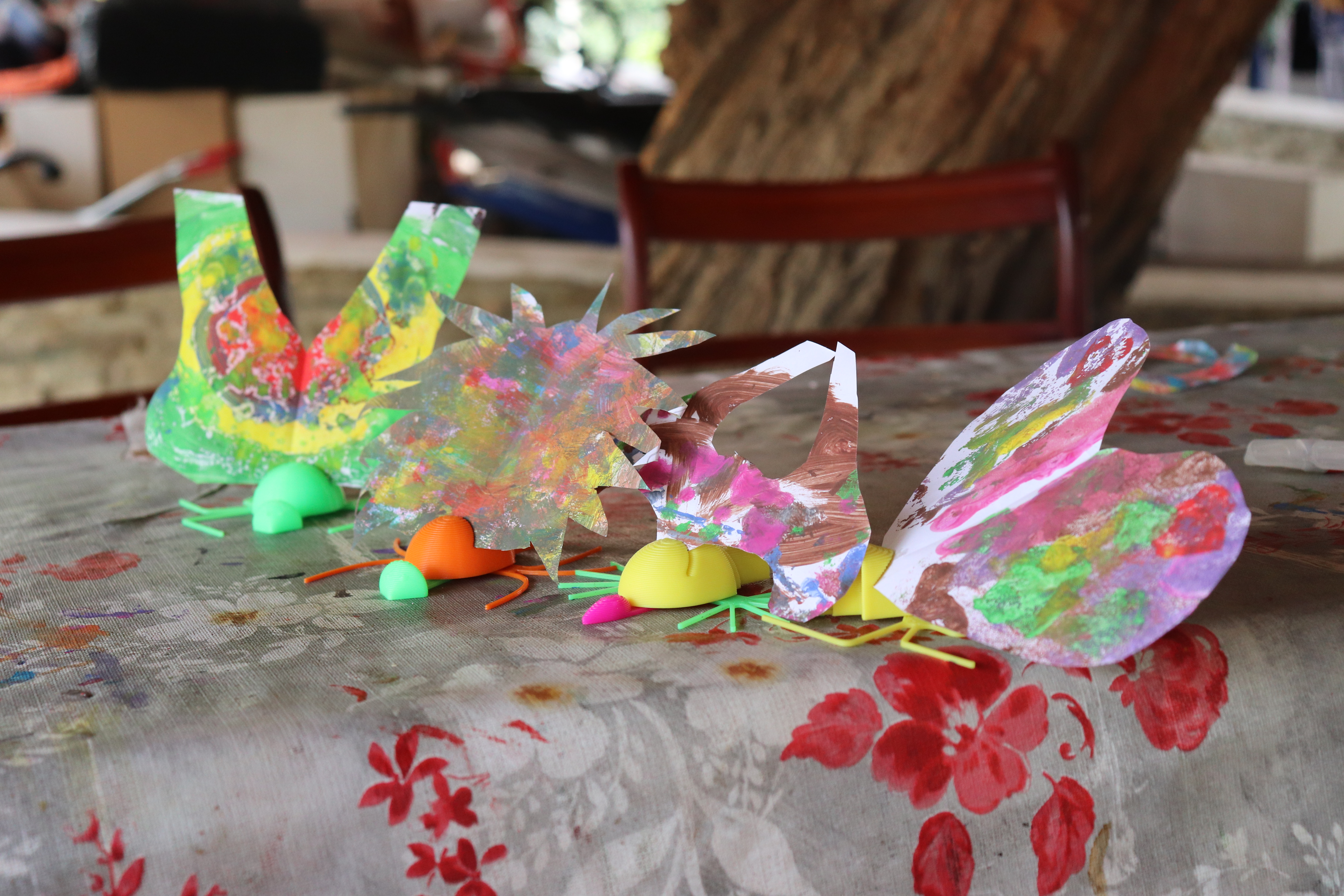
On the second day, each child selected a model for their bug's torso and learned to 3D print it themselves.
These models featured spaces for attaching wings and customizable legs and heads. For the wings, we introduced symmetrical painting techniques similar to Rorschach figures, helping children discover the importance of symmetry in the natural world.
Bug hotels: Building habitats
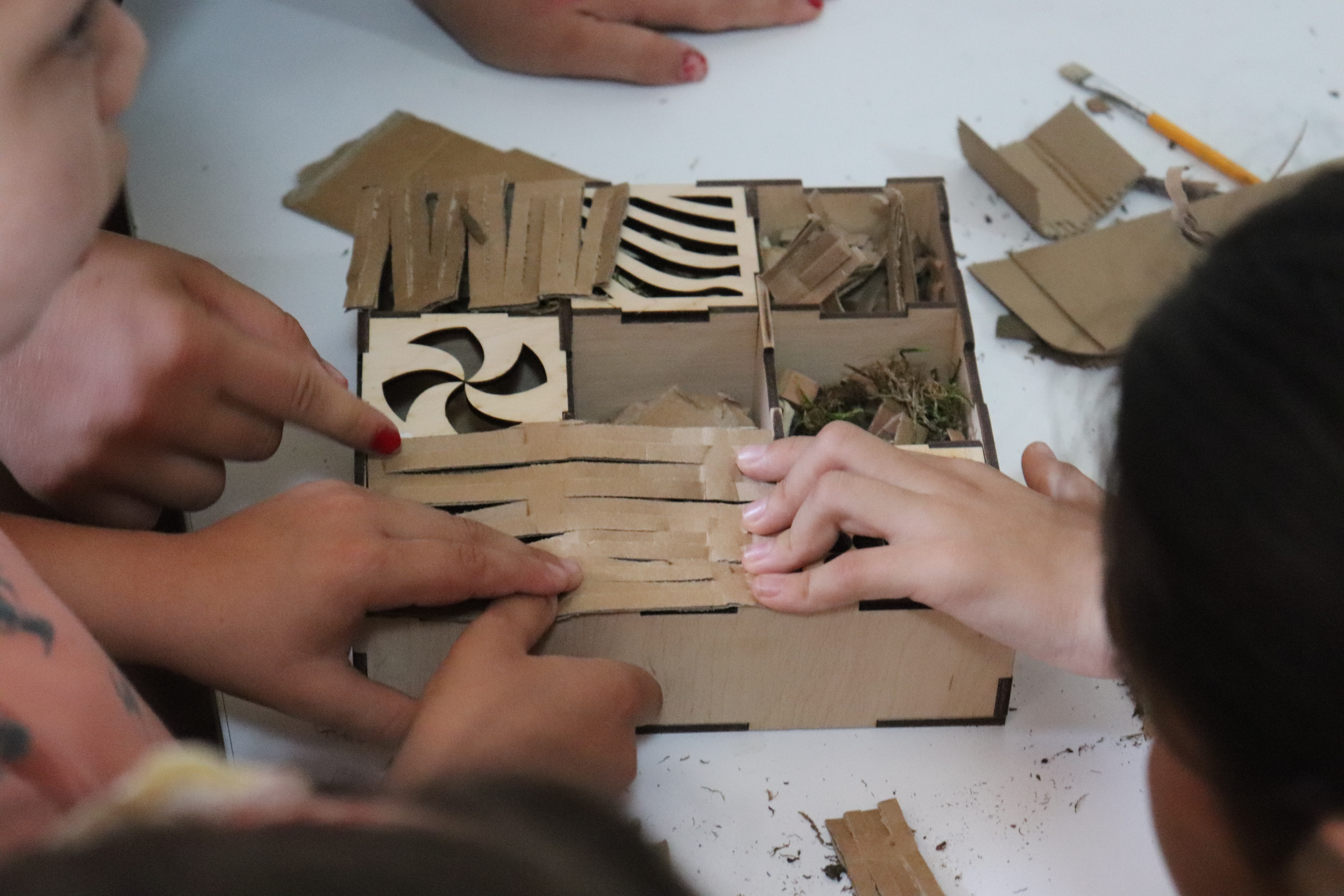
The final crafting day involved building "bug hotels" from laser-cut wood parts. After assembling the structures, the children gathered natural materials like branches, stones, moss, and leaves to create appealing habitats for local insects.
Impact beyond the camp
An important but unexpected outcome of the Bug Camp emerged regarding gender dynamics. As Borka reflects: "For some reason, every girl we worked with at the shelter was afraid of using crafting and digital tools. Many said they wouldn't be able to do it, while others simply kept their distance from the equipment."
However, the camp's thematic structure and emphasis on teamwork produced remarkable results. "By the end of the camp, every girl had tried everything at least once. After that experience, they could decide whether to experiment more with these tools. Although some remained hesitant afterwards, we successfully engaged many girls in what is traditionally considered 'boys' crafting."
The most rewarding outcome was witnessing both children and parents absorb and retain knowledge about insects.
"The bug topic turned out to be so interesting, that even the moms joined us in the educative sessions," Borka recalls. "Later, when we met the participants, they could still tell us all the things we talked about in connection with the insects and that is a real success story—that means they are going to remember how they can co-exist with such species as bees and spiders, on which very much of our comfortable lives lie on, or how to avoid ticks, which can carry numerous serious diseases, without having to kill them, fear them, or use hard chemicals to get rid of them."
The Bug Camp successfully engaged children across different age groups.
"It was great to see, that we could comfortably work with a wide age-range, as even the smallest children had their own idea of how bugs should look like, and it was a great reward to keep the artworks they did for themselves," says Borka. "The younger ones played with the 3D printed models, and the older children pinned their stamped art on their walls, because they were proud of it. I think in our field of work, that is the biggest indicator of a successful programme."
By combining digital fabrication technologies with nature education, we created a memorable experience that transformed fear into fascination, making the complex world of insects accessible and engaging for all.
The operation of RIFs in Hungary is carried out within the framework of the Building Bridges project, which is supported by the Swiss-Europe Rapid Response Fund and the Swiss State Secretariat for Migration - SEM.