24.2% of children in the EU remain at risk of poverty or social exclusion. Digital violence is escalating. Teachers are often unaware of their legal obligation to report abuse. Child participation in decision-making frequently remains tokenistic. These challenges are well documented in the Eurochild 2025 report on children in need across Europe, highlighting the need to strengthen efforts to protect and promote children’s rights.
Daphne-CHILD supports efforts to respond to these challenges. This three-year EU-funded programme, led by Eurochild and Terre des hommes, empowers 48 grassroots organisations across nine European countries to prevent and address violence against children. We build the capacity of local organisations, facilitate knowledge exchange, and amplify their voices in broader policy conversations.
The Daphne-CHILD Grantee Spotlight Podcast Series emerged from this partnership. The series documents how these grassroots organisations are preventing violence against children in their communities through locally developed solutions that respond to specific contexts and needs.
Each episode features conversations with practitioners from organisations working across the programme’s nine countries: Bulgaria, Greece, Ireland, Hungary, Romania, Portugal, Spain, Serbia, and Ukraine. These aren’t theoretical discussions about what might work; rather, they're evidence-based insights from people doing the work daily.
Understanding local solutions
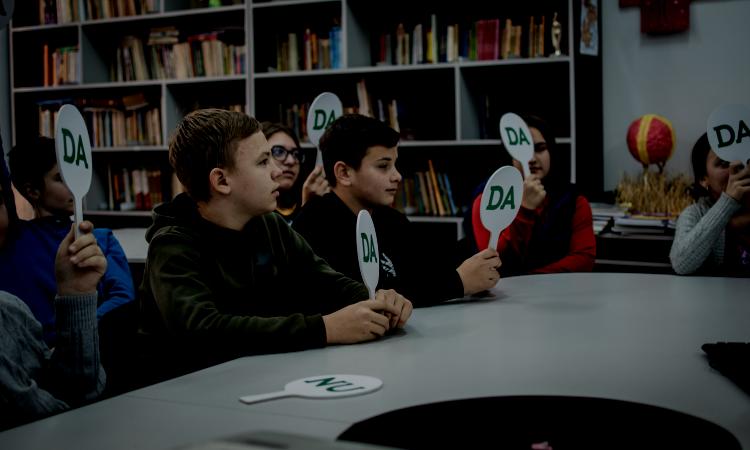
In rural Ukraine, students haven't waited for adults to fix broken reporting systems. They've designed peer mediation groups, elected by classmates, who monitor cases, ensure authority follow-up, and provide emotional support.
In Romania, children aged 12-14 created their own violence prevention messages through art and discussion. These messages now guide workshops with their own parents and teachers.
In Seville, Spain, young women who've left the care system are being recognised as the experts they are, leading violence prevention in their community.
Contexts shapes solutions
A representative of an after-school project from Dublin, Ireland put it clearly: “When you connect with children, you connect with their story.”
Every organisation in the series emphasises this truth: relationship-building cannot be skipped. Safe spaces must be authentic, not performative. Children immediately sense whether adults genuinely care or are following a checklist.
How each organisation builds these connections looks completely different, shaped by local culture, resources, community dynamics, and children's specific needs.
When the representative of Madrid's ITE Network calls smartphones “a lifeline without a safety net” for migrant children, he's describing a universal challenge that requires locally-specific solutions. His organisation creates cyber safety materials in Spanish, French, and Arabic – but translation is just the start. Peer educators from these communities review all the content to ensure cultural resonance.
“The message has to be meaningful for them,” he explains. What works in one context may completely miss the mark in another.
Common insights, different applications
The podcast, now in its eighth episode, offers valuable insights into how violence against children can be effectively prevented and addressed:
- 80% of children are more likely to disclose violence to peers than to adults. Organisations embracing peer education approaches consistently report better outcomes.
- Connection matters more than curriculum. Building trust must come before delivering content.
- Teachers often hesitate to report abuse despite legal requirements, as in tight-knit communities anonymity is difficult and they doubt that reporting will lead to meaningful change.
- Poverty doesn’t just correlate with violence – it drives it. Economic hardship separates families and normalises harm in under-resourced communities.
These insights reinforce what Eurochild’s research highlights at the policy level. The podcast brings this evidence to life by showing what works in practice. More episodes will continue to explore these lessons.
What international actors should do
The discussions with local organisations suggest clear approaches for international actors:
- Provide flexible funding that allows organisations to develop contextually appropriate solutions, rather than imposing predetermined models.
- Facilitate knowledge exchange between organisations facing similar challenges in different contexts – not to replicate solutions, but to share learning.
- Build capacity without controlling. Offer support while trusting local expertise to determine what is needed.
- Amplify local voices so grassroots innovation informs policy conversations.
- Support systemic change by connecting local successes to broader advocacy efforts.
Beyond projects
Zsofia Karetka, podcast host and Daphne-CHILD Communications and Content Manager, shares: “What emerges from these conversations is a clear vision: children are active agents in their own safety, not just passive recipients of protection. Communities already have the knowledge and expertise needed – they don’t need solving, they need support. Violence prevention is deeply relational work, built on trust and long-term commitment, not just technical interventions. The expertise to protect children exists within communities, and international actors have a role to play: to resource it, amplify it, and create space for it to flourish."
Listen and learn
The Daphne-CHILD Grantee Spotlight Podcast Series provides an opportunity to hear directly from practitioners doing this work daily. Each episode shares perspectives on child protection and international development.
Localisation isn't just about respecting local contexts; it's about recognising that sustainable solutions come from the ground up.
Listen to all the podcast episodes here, and stay tuned for upcoming ones.