
For over three years, children in Ukraine have been growing up under the constant threat of war. Kyrylo is one of them. Amid air raid sirens, uncertainty, and disrupted daily life, he continues to carry on. He talks, he plays… and above all, he still dreams. Through his words, gestures, and silences, we catch a glimpse of what it means to grow up in the heart of chaos. Most importantly, his story reminds us that a listening ear, a safe space, or a caring adult can become a lifeline. In this extract from the Courage magazine, we take you closer to the experiences of children affected by the war in Ukraine. More than a testimony to their suffering, it is also a powerful reflection of their courage and resilience.
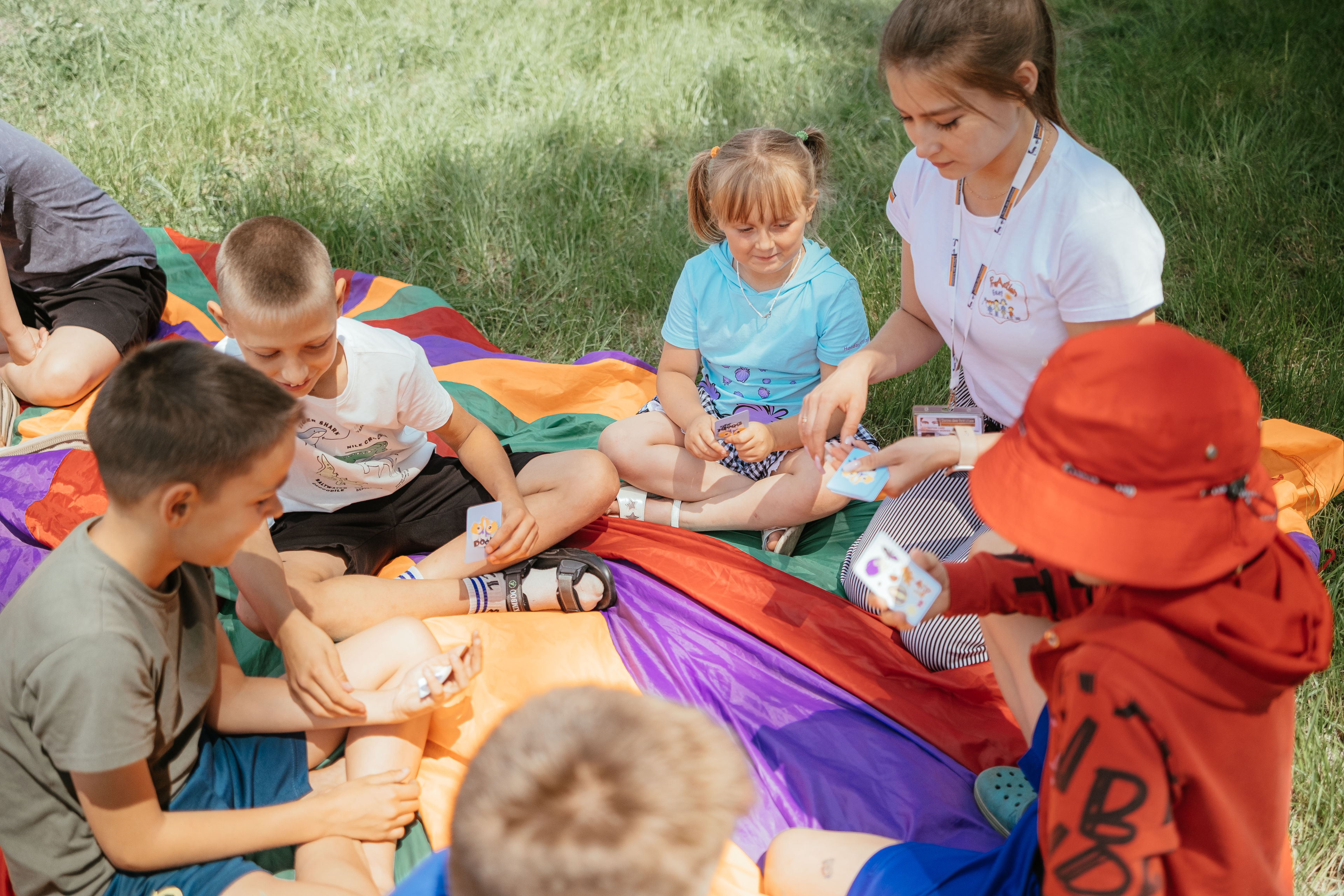 From the city of Kharkiv, in the northeast of the country, it takes just over an hour to reach the village of Rizunenkovo. Nestled in the plains, it’s surrounded by endless fields. At times, the tranquility of nature is shattered by destroyed roads and buildings. Yet, despite the heavy atmosphere and grey skies, the Child-Friendly Space (CFS) established by Tdh is full of color – on banners being waved, on children’s drawings, on the slides in the playground, hoola-hoops and poles set up for activities. But colors alone can’t make people forget the war.
Karina Mala, a 22-year-old facilitator, reveals the dark side of everyday life: "Every day, we have to protect ourselves. Fear of bombs is our biggest challenge – not only for classes but for our lives as well. The children come in frightened, not knowing what to expect. But we create an atmosphere of trust and a safe space."
When the alarms don’t pierce the plain, the children are happy to get together. Many of them have been displaced to this area with their families, away from the front line. Usually, they stay confined to their homes or temporary accommodation, where time passes too slowly. But at the Rizunenkovo CFS lingers a school playground atmosphere. Here, there is no room for boredom: childhood is back on track with laughter, drawing, running, jumping and academic support.
Sitting in a circle on the grass, they’re children of all ages – 6 to 17, blonde or brunette, quiet or playful. All they want, says 14-year-old Kyrylo, is: "to be with friends."
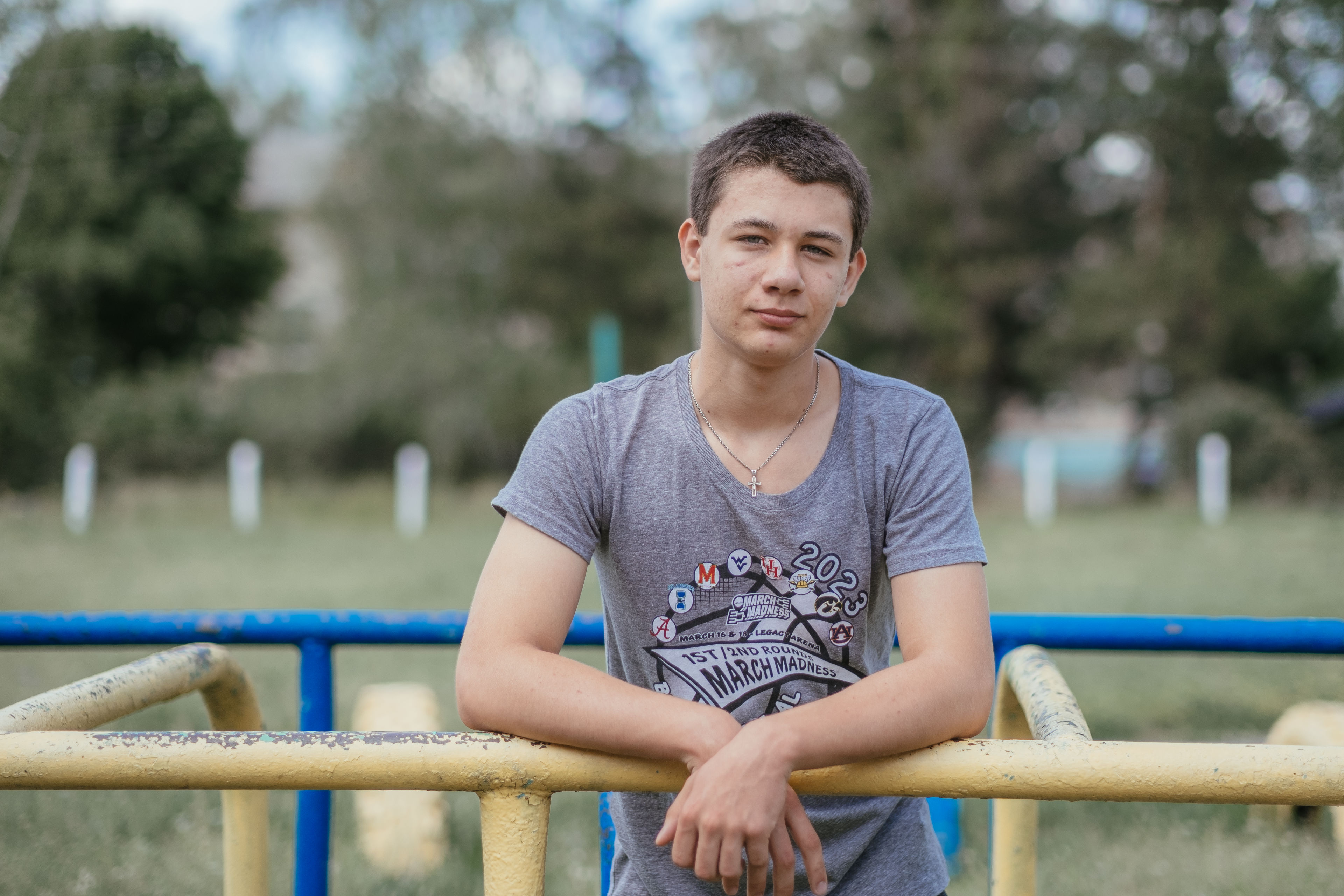 The CFS is in an empty school building here, but in other areas, it might be a bunker or any surviving secure structure. "I’m always happy when I arrive and when I leave," shares Kyrylo, who does not want to talk about the war. Friends who have left the region, air raid sirens, long days spent locked up, families torn apart... For Kyrylo, like his classmates, the CFS is his escape. His safe haven.
"I have many dreams… but I’m keeping them secret for now," he says with a serious yet hopeful tone.
Children draw strength from the support of adults – who, in turn, are inspired by their resilience. As Karina explains: "When I see a child opening up, dreaming again, making friends, and reconnecting – It gives me incredible energy! I too am psychologically affected by the war. One day, a shell landed, and I had to dive and shield a friend’s body with mine."
As we follow the children through their routine, a powerful symbol emerges: the clouds part, and their activities continue under a brightening sky, hinting at the arrival of summer. Today, there were no sirens, no bombs. A peaceful day in the CFS does wonders for the children. Between eyes marked by hardship, sparks of joy emerge.
Even fleeing reality for just a few seconds can make a difference, as Laurence Gaubert, head of Tdh’s Emergency Response Unit, explains: "In emergencies, parents don’t have time to explain what’s happening. Kids imagine anything and everything. A child needs to play, to laugh, to shake those fears out of their head. Taking time to explain, to entertain them – it’s essential."
But it must be clear that just as there is no health without mental health, there is no mental health without basic needs. Laurence emphasizes this point: "You can’t establish mental health activities if people don’t have food, shelter or a roof over their heads. You have to meet basic needs first and make sure it’s done in a protective environment, otherwise it doesn’t make sense."
Meeting basic needs and doing everything possible, even if it’s not much, to make children feel good is Tdh’s goal. Kyrylo and so many other children did not choose to live through a war. But they draw on their inner strength to keep going. To get better. With guidance, they understand that they do not have to bear the responsibility for these tragedies alone. Because mental health is a right, that simply.
Parents need support too
"The facilitators support our children – but they help us stay strong too, and that’s crucial in wartime," says Svitlana, Kyrylo’s mother. She attends Tdh’s positive parenting workshops, which help parents better understand and respond to their children’s behavior. Karina values these sessions: "Parents are in better spirits. They need social interaction too."
Iryna, Anastasia’s mother, says: "It’s wonderful for parents – we gather, talk, and share tea." With stronger, better-supported parents, children benefit too. A more stable family structure is key to surviving the daily hardships of war.
Extract from the Tdh Courage magazine, September 2025 edition