
“Sometimes what families need most is to feel heard and for children – a safe space to simply be children again.”
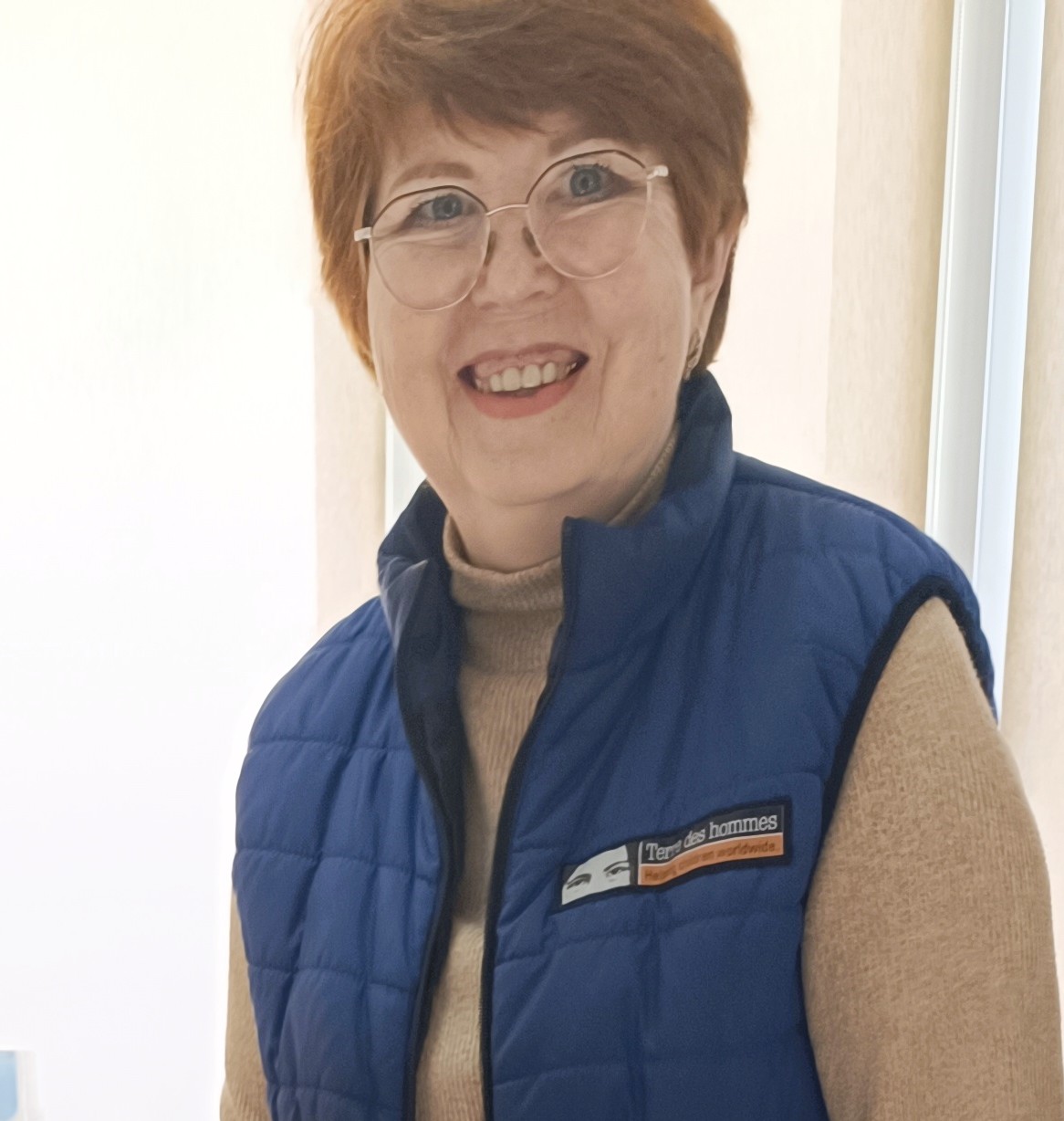 Irina, originally from the Donetsk region of Ukraine, is a social assistant at Terre des hommes Moldova, where she supports refugee families from Ukraine in navigating displacement, uncertainty, and the challenge of rebuilding their lives. Having herself been forced to flee conflict twice, she brings deep empathy and lived understanding to her work. In this conversation, Irina shares her journey from personal displacement to humanitarian service, the resilience she has witnessed in families, and the hope that continues to guide her every day.
Dear Irina, to begin, please tell us a bit about yourself.
My name is Irina, and I am from Ukraine. In 2014, due to Russia’s aggression, I was forced to leave my hometown in the Donetsk region, which came under occupation. Before that, I worked in the banking sector and lived with my husband. My adult daughter was also forced to leave Donetsk for the same reason.
After the forced relocation, I had to rebuild my life from scratch – adapting to new circumstances, finding work, and learning to live in a changed reality.
In 2016, I started working in the humanitarian sector, and since then I have been involved in projects that support children and youth, which provide assistance to vulnerable communities near the contact line, and later I worked on information support and data collection for regional development programmes in eastern Ukraine.
In spring 2021, I moved to Odesa, where I returned to my main profession and worked as a chief economist at a bank. My daughter and son-in-law were already living there. It seemed that life was gradually stabilizing.
But on 24 February 2022, the world collapsed again. Our family decided to leave, and that is how I ended up in the Republic of Moldova.
How did your journey with Terre des hommes begin?
The first months in Moldova were very difficult emotionally and psychologically. I couldn’t stay on the sidelines and found a local initiative helping refugees. I sorted clothes and food, distributed aid, spoke with families, and supported them.
In April 2022, I happened to meet a colleague I had worked with in Donbas. She was already part of the Terre des hommes team and invited me to an interview.
That’s how I joined the team.
At first, I worked with families at a temporary accommodation center set up at Moldexpo in Chisinau. This involved supporting children and their parents and helping them adapt to temporary living conditions.
In autumn 2022, after the center closed, a mobile team of psychologists, animators, and social assistants was created. I joined as a social assistant, helping families with children across Moldova.
Today, I work as a social assistant at the Cashpoint in Chisinau – a center for refugee registration and financial assistance processing.
What does your “typical” working day at the Centre look like?
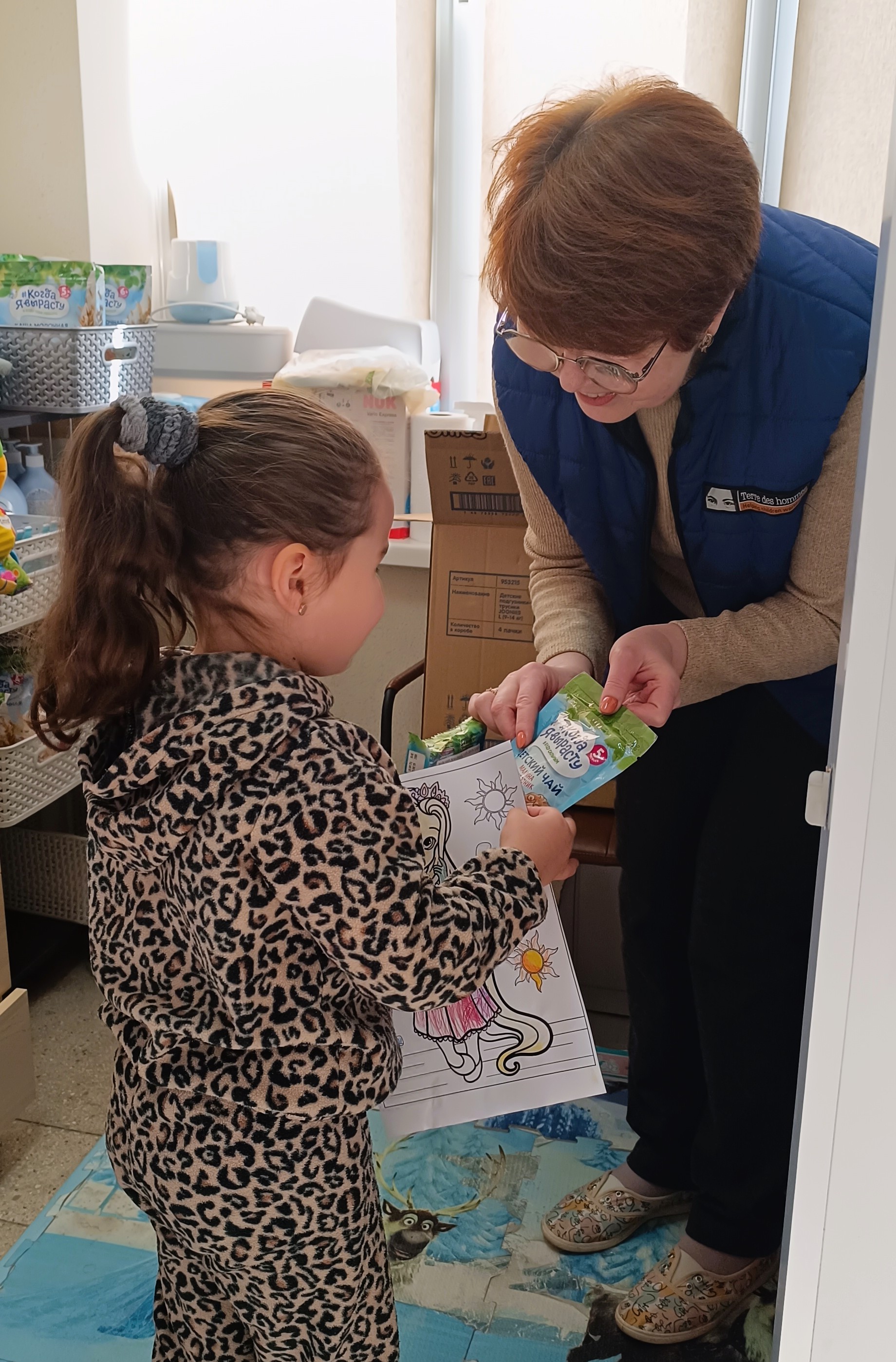 My workday is primarily about communicating with families. We provide consultations, explain procedures, and help people navigate the issues they bring to us.
The center has a child-friendly space where kids can play and draw while their parents complete registration. We also have a “mother and baby corner” – a safe space for mothers with infants.
In my work, I use active listening and empathy, striving to create a welcoming atmosphere. It’s important not only to process assistance but also to truly hear the person, understand their condition, provide information in clear language, and offer emotional support.
What surprised you most over these four years?
I was amazed by people’s resilience. The journey from fear and total confusion to adaptation and social integration was very difficult.
Today, many families rent housing, children attend Moldovan schools and kindergartens, and parents have found jobs. Emotional challenges remain – separation from loved ones, homesickness, anxiety for relatives, and serious financial difficulties. But Ukrainians have endured.
I was deeply touched by the mutual solidarity – both from Moldovans and Ukrainians. People supported one another, created volunteer initiatives, and organized social media help pages. Humanity became the main resource.
Is there a story that stayed with you?
There have been many stories over these years. I’ve helped families in a wide range of situations – from providing food, hygiene items, and clothing to purchasing tablets for school, children’s beds, paying for medical examinations, massage, and rehabilitation programmes for children with disabilities.
What touches me most are the moments when parents say, after receiving support: “Now we will manage”. Knowing that help arrived at the right moment and truly changed their situation stays with me.
How have people changed during this time? And you?
People have become more resilient. They’ve gone through fear and uncertainty, the closure of accommodation centers, moves to other countries, or returns to Ukraine. Not everyone managed the financial burden of living abroad, but many adapted.
I’ve changed too. I learned to accept life as it is. Thanks to the support of psychologists in our organisation, my personal motto today is: “Live here and now”.
I’ve gained tools for emotional resilience and share them with families who need support.
What gives you hope?
Life itself gives me hope; meetings with my daughter and son-in-law, even if rare; traveling around Moldova and other countries; new friends, books, and experiences.
And of course, my work. Terre des hommes has a warm, supportive atmosphere. I was welcomed as part of a close-knit team, and that sense of belonging and mutual support is priceless to me.
Hope comes from understanding that even in the most difficult circumstances, people can preserve their humanity and support one another.
What message would you like to share with people in Moldova who stood by refugees all these years?
From the bottom of my heart, I want to thank the people of the Republic of Moldova.
In the first days of the full-scale war, Moldovans showed incredible solidarity – opening their homes, creating accommodation centers, bringing food, clothes, and shoes, and offering help in every way. Many initiatives were supported by international organisations, but Moldova provided facilities, infrastructure, and most importantly – human warmth.
I personally met many locals and was deeply moved by their kindness. One family provided me with housing free of charge for six months. I am endlessly grateful. I had not felt such warmth and acceptance even after 2014 in my own home.
Nearly four years have passed. Of course, the initial emotional surge is not the same as in the first months, but the support remains. I understand how much effort stands behind every form of assistance – the work of specialists, volunteers, government institutions, international organisations, and ordinary citizens. It is a long chain in which everyone’s contribution matters.
I am grateful to my colleagues at Terre des hommes, to the donors, partner organisations, state institutions in the Republic of Moldova, as well as to all the people who work alongside us.
Today, I can sincerely say: Moldova has become my second home. Thank you for your humanity.