Despite sleepless nights, extreme cold, and daily shelling, children and young people in Ukraine continue to show up and claim their right to be heard.
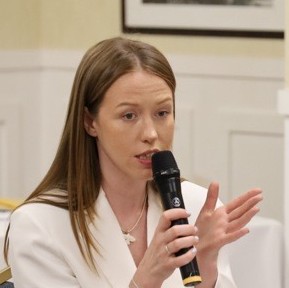 Mariia Ismahulova is our Child Protection and Education in Emergencies Coordinator in Ukraine. Among her responsibilities is guiding and facilitating the National Child and Youth Advisory Board, recently created in Ukraine with the strong institutional support of Advisor–Commissioner of the President of Ukraine for Children’s Rights and Child Rehabilitation, Daria Herasymchuk. The Board brings together 130 children and young people aged 14 to 23 from across the country.
Mariia shares her experience of supporting children and young people who continue to participate and raise their voices despite extreme challenges. Her reflections provide a firsthand look at the courage, resilience, and commitment of children and youth in the midst of war and hardship:
The situation in Ukraine over the past months has been the most challenging since the beginning of the full-scale invasion in 2022. I rarely say this, but life now often feels less like living and more like surviving.
In many homes, temperatures drop to 9°C indoors when it is minus 20°C outside. Sometimes, there is no electricity for two to three days, and when the situation “stabilizes”, that often means only four hours of power over a full 24-hour period. Sometimes there is no water. There is daily heavy shelling. If it does not hit your city one night, it hits your mother’s city, your friend’s city, a maternity hospital, or a civilian passenger train.
Against this backdrop of constant disruption and insecurity, the Child and Youth Advisory Board (CAB) has been actively working across six thematic priorities identified by children and young people as the most relevant to their lives: bullying, mental health, sexual education and prevention of violence, access to quality leisure, cybersecurity, and violations of children’s rights within the family.
Young representatives work collaboratively within these thematic areas to identify key challenges and develop recommendations based on their experiences and perspectives. They also engage with national-level state institutions, providing a platform for children and youth to present their views directly to decision-makers and to highlight the issues they face in their daily lives.
In the current situation, every action of the Board matters not just for what it achieves, but because it happens despite the challenges. These actions happen when basic needs are not met, when people lack heat, light, warm food, or hot water, and yet we as well as children of the National CAB continue to show up and do the work.
 For example, on 3 February, the children and youth of the Board had a meeting with the First Lady of Ukraine, Olena Zelenska. The night before this meeting, Ukraine was hit by 450 drones and missiles, resulting in destroyed residential buildings, civilian casualties, and entire regions left without heating. Despite such a terrifying sleepless night and no power or water in the morning, the meeting was not canceled – up to 100 children and youth joined to fulfill their task of being the voice of other children.
One of the questions asked by a youth representative during the meeting stayed with me deeply. They asked the First Lady of Ukraine what she would recommend to children and young people who wake up in the morning after a night of heavy shelling and see no reason to get out of bed, or worse, who feel guilty for surviving while other children, women, and men are killed every day and every night.
This is the emotional and human context in which all of this work is happening.
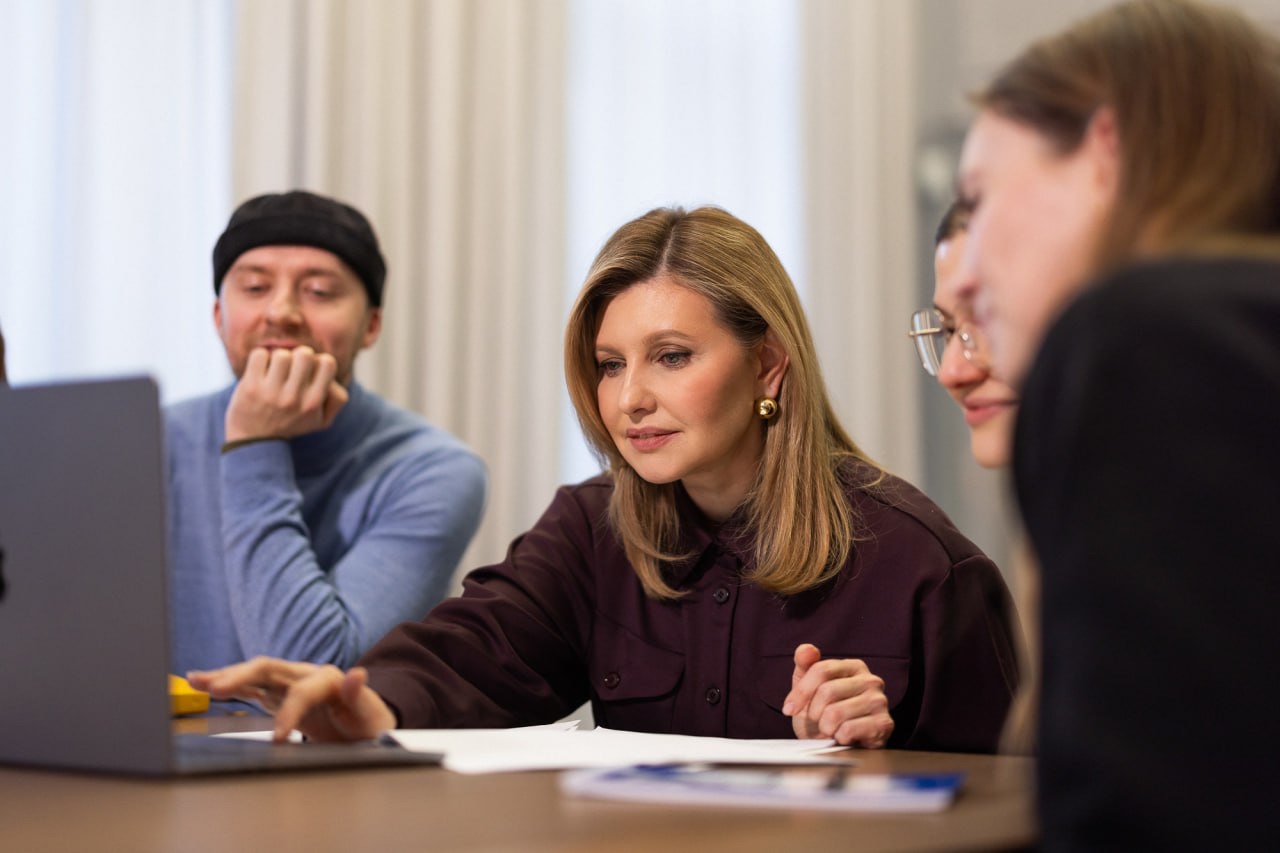
Looking forward, representatives of the National CAB will be involved in the initiative of the First Lady of Ukraine and her Foundation to establish Youth Spaces across different regions of the country. Members of the Board have been invited to contribute as advisors and consultants, providing input on the content and curriculum of activities offered through these Youth Centers to ensure they reflect the real needs and interests of young people.
What matters most is that these young voices are being heard, that they are actively participating, and that their courage and resilience continue to inspire and lead to change despite the extreme circumstances they face.
Decision-makers and international actors need to understand that resilience and adaptation are not the same. Ukrainian children and young people have adapted to prolonged and severe wartime conditions, but adaptation does not mean they are becoming stronger or that their well-being is protected. They are growing up in an environment where instability, stress, and rights violations risk becoming perceived as normal. The bigger issue is that these young people will shape the future of our societies – and it is on us to ensure that their courage is met with real support, not just expectation.